
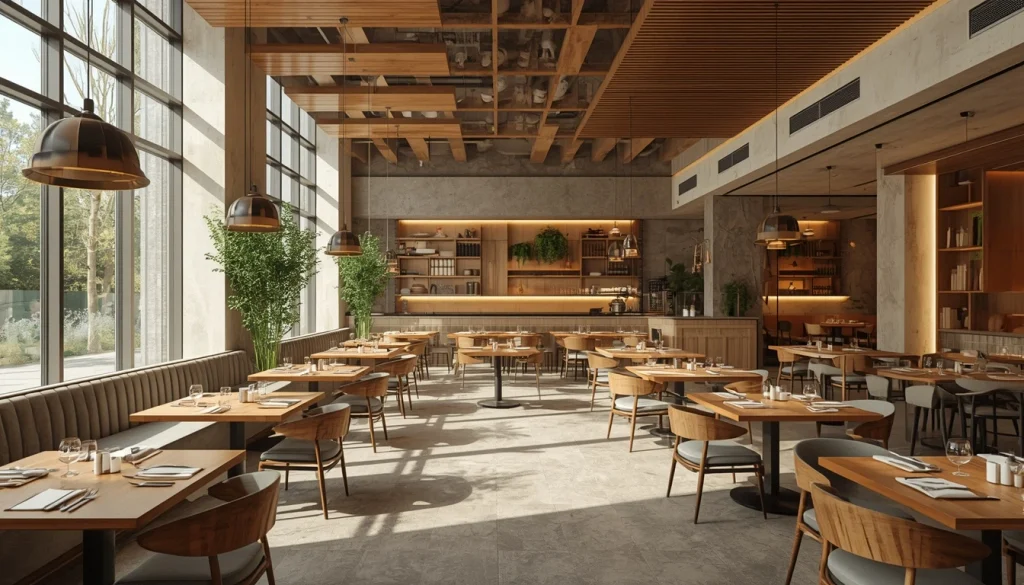
Restaurant Interior Design Ideas: 10 Styles That Create Memorable Dining Spaces
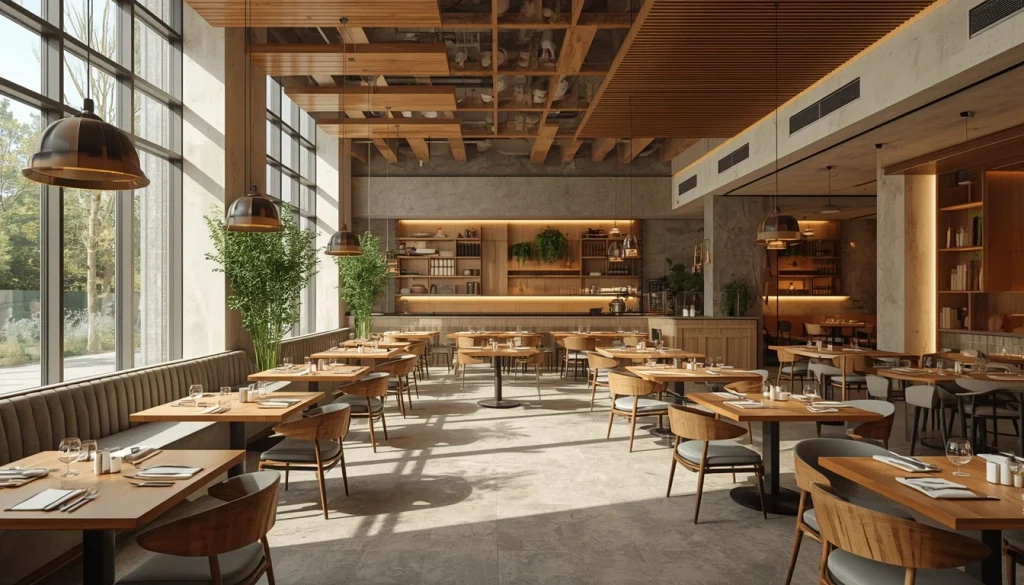
A restaurant is more than a place to eat. The moment customers walk through the door, they begin experiencing the space through its colors, lighting, furniture, materials, layout, and overall atmosphere. A thoughtfully planned interior can make a restaurant feel welcoming, comfortable, memorable, and connected to its food concept.
Whether you are designing a small neighborhood café, an elegant Italian restaurant, a modern Chinese dining space, a Mexican restaurant, or a fast-food location, the right restaurant interior design can influence how customers experience the brand.
Today, restaurant owners are paying closer attention to interiors and designs because customers increasingly share their dining experiences through photographs and social media. This makes the restaurant environment part of the overall brand—not simply decoration.
In this guide, we explore practical interior design for restaurant spaces, including ideas for small restaurants, international cuisines, fast-food concepts, lighting, furniture, colors, materials, and current interior design trends.
Why Restaurant Interior Design Matters
Good restaurant interiors need to balance beauty with functionality. A beautiful dining room may look impressive, but if the tables are too close together, lighting is uncomfortable, or customers cannot move easily, the experience suffers.
Effective restaurant design considers several elements at the same time:
- Customer comfort
- Efficient seating arrangements
- Brand identity
- Lighting and atmosphere
- Furniture selection
- Color psychology
- Materials and finishes
- Kitchen and service flow
- Accessibility
- Cleanliness and maintenance
- Photography and visual appeal
The goal is not simply to create the “best restaurant interior design” according to a particular style. The goal is to create a space that makes sense for the restaurant’s concept, customers, menu, location, and budget.
For example, a luxury restaurant may benefit from rich materials and sophisticated lighting, while a small casual restaurant may need flexible furniture and smart space-saving solutions.
1. Italian Restaurant Interior Design: Warm, Elegant, and Authentic
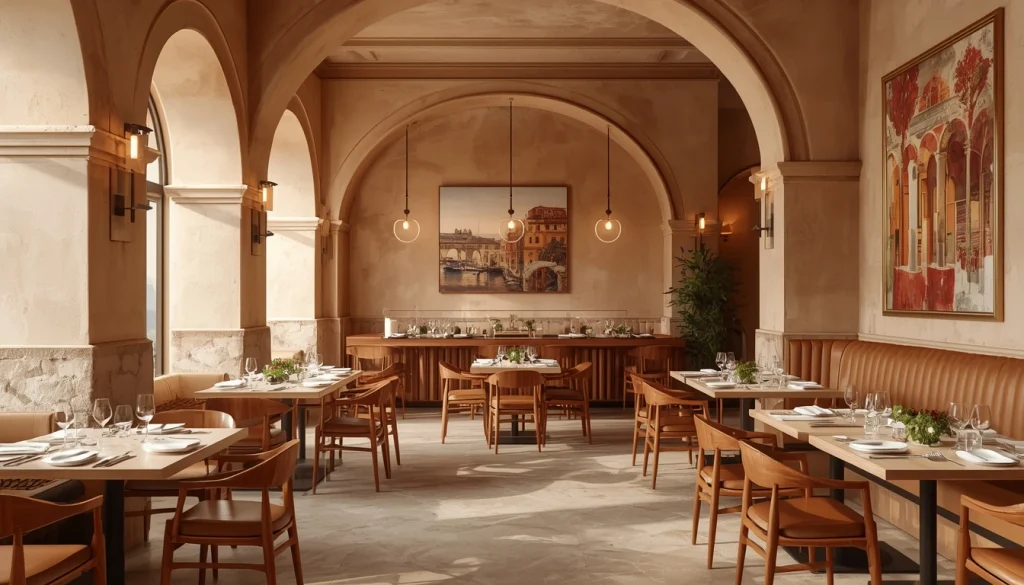
Italian restaurants often work particularly well with interiors that feel warm, welcoming, and timeless. Instead of making the space overly formal, designers can combine natural materials with traditional Italian influences.
For italian restaurant interior design, consider:
- Warm wood furniture
- Terracotta or stone finishes
- Soft pendant lighting
- Natural textures
- Neutral walls with warm accent colors
- Open shelving
- Mediterranean-inspired artwork
- Greenery and plants
- Rustic or handcrafted details
A successful interior design Italian restaurant concept should complement the food without becoming a visual distraction.
For a more contemporary restaurant, traditional Italian elements can be simplified. For example, natural wood tables can be paired with modern chairs, minimalist lighting, and clean architectural lines.
This creates an interior that feels Italian-inspired while still looking modern.
2. Chinese Restaurant Interior Design: Culture Meets Contemporary Style
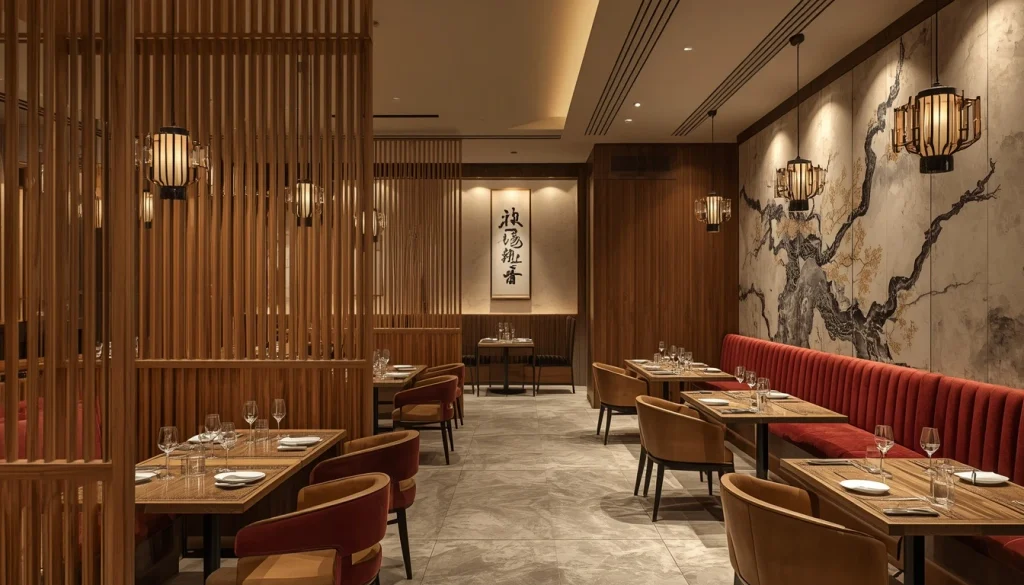
Chinese restaurants offer many opportunities to combine cultural identity with modern interior design.
Traditional design elements can include wood screens, lantern-inspired lighting, decorative patterns, natural stone, and carefully selected artwork. However, using too many decorative elements can make the space feel visually crowded.
A modern chinese restaurant interior design can instead use a restrained palette and introduce cultural details through carefully selected features.
Think about:
- Wooden partitions
- Red or deep accent colors
- Decorative screens
- Warm lighting
- Natural wood
- Minimal Chinese artwork
- Patterned wall panels
- Brass or metallic details
The best approach to interior design Chinese restaurant spaces is often to use cultural references selectively.
For example, one statement wall may provide stronger visual identity than covering every surface with traditional decorations.
3. Mexican Restaurant Interior Design Ideas
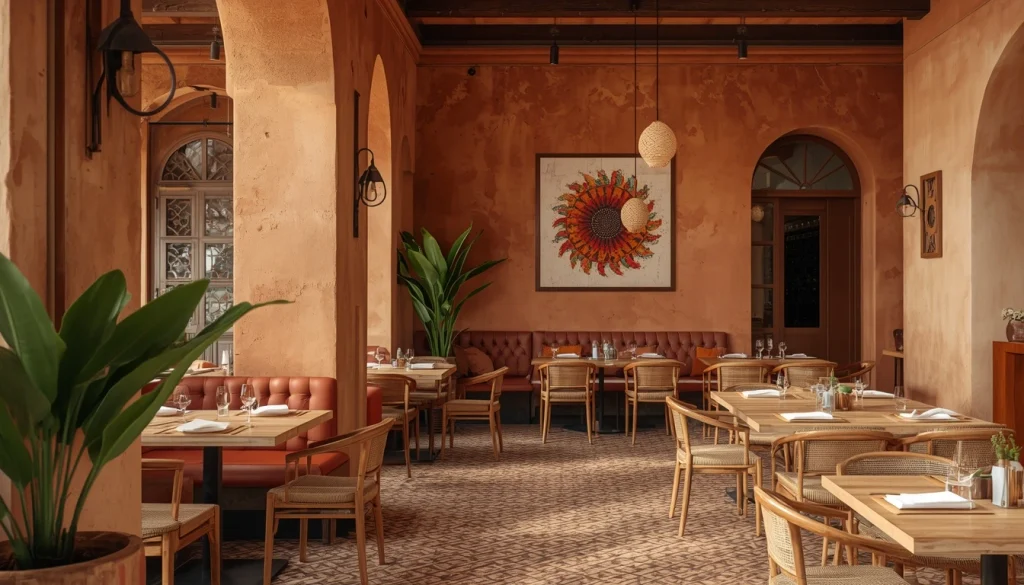
Mexican restaurants are naturally suited to expressive colors, handmade textures, and energetic visual details.
When developing mexican restaurant interior design ideas, designers can use color strategically instead of applying bright colors everywhere.
Potential elements include:
- Terracotta tones
- Earthy neutrals
- Handcrafted tiles
- Textured plaster walls
- Natural wood
- Woven materials
- Decorative ceramics
- Indoor plants
- Colorful artwork
A contemporary Mexican restaurant could combine warm neutral walls with colorful chairs or patterned tiles. This keeps the atmosphere lively without making the interior feel overwhelming.
Another approach is to create a more sophisticated Mexican-inspired interior using muted clay, sand, olive, and wood tones.
4. Small Restaurant Interior Design: Make Every Inch Count
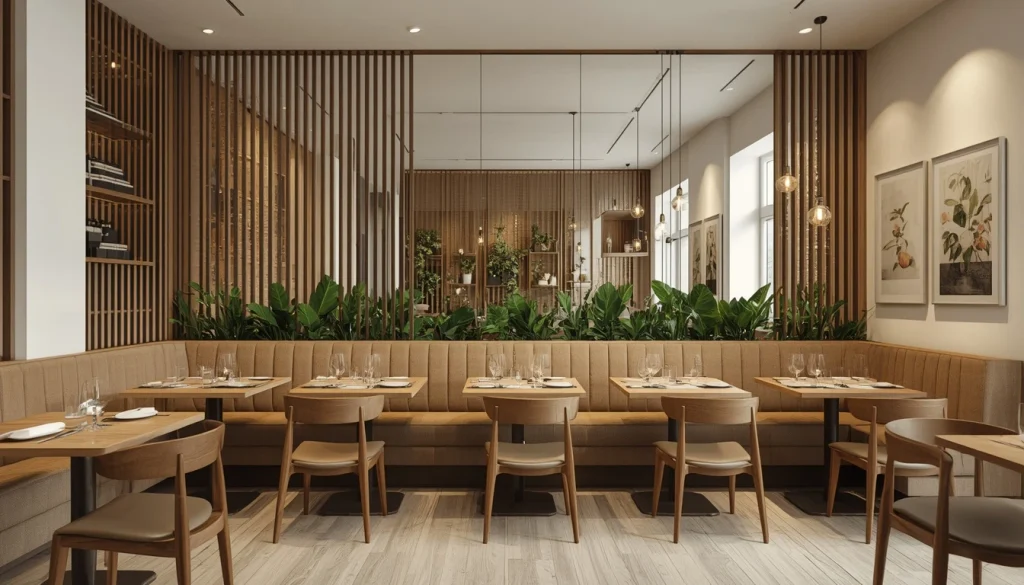
Small restaurants require especially careful planning. When space is limited, every piece of furniture needs to serve a purpose.
Good small restaurant interior design starts with circulation. Customers and staff should be able to move comfortably without constantly navigating around tables and chairs.
Useful strategies include:
Choose Compact Furniture
Slim tables, lightweight chairs, and appropriately scaled seating can make a small dining area feel more spacious.
Use Wall Seating
Built-in benches can provide efficient seating while reducing the amount of floor space required.
Use Vertical Space
Wall-mounted shelves, artwork, plants, and decorative features can add personality without occupying valuable floor area.
Use Mirrors Carefully
Mirrors can visually expand a small dining room by reflecting light and creating a greater sense of depth.
Keep the Color Palette Simple
A limited palette can make a compact restaurant feel more organized. Light neutral colors combined with one or two accent tones often work particularly well.
Create Flexible Seating
Movable tables allow the restaurant to adapt its layout for couples, families, groups, or larger events.
For small spaces, functionality should come before unnecessary decoration.
5. Fast Food Restaurant Interior Design
Fast-food interiors need to support speed, comfort, cleanliness, and strong brand recognition.
Modern fast food restaurant interior design is moving beyond rows of identical tables and plastic furniture. Many brands now use contemporary materials, comfortable seating zones, digital ordering areas, and distinctive visual elements.
Important considerations include:
- Easy-to-clean surfaces
- Durable furniture
- Clear customer circulation
- Comfortable waiting areas
- Efficient ordering zones
- Strong brand colors
- Practical lighting
- Digital menu displays
- Flexible seating
A fast-food restaurant can still have personality. Wood-look finishes, modern pendant lights, plants, wall graphics, and comfortable seating can make the environment more inviting while maintaining efficiency.
6. Modern Restaurant Interior Design
Modern restaurant design focuses on simplicity, clean lines, functional layouts, and carefully selected materials.
Instead of filling the room with decorative objects, modern interiors often allow architectural features and materials to become the main attraction.
Popular combinations include:
- Wood and black metal
- Stone and natural wood
- Glass and brass
- Concrete and warm lighting
- Neutral walls with bold furniture
The key is balance.
A completely minimal restaurant can sometimes feel cold. Adding warm lighting, natural materials, plants, and comfortable upholstery can create a more welcoming environment.
7. Lighting Can Transform a Restaurant
Lighting is one of the most important elements in restaurant design because it affects both atmosphere and functionality.
Bright lighting may work well in casual daytime restaurants, cafés, and fast-food spaces. Softer lighting can create a more intimate atmosphere for evening dining.
Consider using multiple lighting layers:
Ambient lighting provides general illumination.
Task lighting helps illuminate specific areas such as tables, counters, or service stations.
Accent lighting highlights artwork, architectural details, shelving, or decorative features.
Pendant lights above tables can create visual zones, while wall lights can add warmth without consuming table or floor space.
Good lighting should also allow customers to see their food comfortably.
8. Choosing the Right Restaurant Furniture
Furniture has both an aesthetic and practical role.
When choosing restaurant furniture, consider durability, comfort, maintenance, dimensions, and style.
For example, a restaurant with heavy daily traffic may require commercial-grade materials that can withstand frequent use.
Dining chairs should provide enough comfort for the expected dining period. Tables should be appropriately sized without unnecessarily reducing circulation space.
Furniture should also visually connect with the restaurant concept.
A rustic restaurant might use natural wood, while a contemporary restaurant may use sleek upholstered chairs and metal accents.
9. Colors and Materials in Restaurant Interiors
Colors can influence how a restaurant feels.
Warm colors may create an energetic atmosphere, while neutral colors can provide a calm and sophisticated foundation.
Rather than choosing colors independently, consider the relationship between:
- Walls
- Floors
- Furniture
- Lighting
- Countertops
- Decorative elements
- Branding
Materials also contribute significantly to the experience.
Natural wood creates warmth. Stone can communicate durability and quality. Metal can add a contemporary character. Textured plaster can create an artisanal feeling.
Combining different textures can make a simple interior more visually interesting without requiring excessive decoration.
10. Restaurant Design Trends to Watch
Current interior design trends are increasingly focused on creating spaces that are functional, memorable, and connected to the identity of the business.
Some important trends include:
Biophilic Design
Plants and natural materials can make restaurants feel more relaxed and connected to nature.
Flexible Seating
Restaurants are increasingly using layouts that can adapt to different group sizes and dining situations.
Natural Materials
Wood, stone, clay, woven textures, and other natural-looking materials remain popular because they add warmth and character.
Statement Lighting
Large pendant lights, sculptural fixtures, and distinctive lighting installations can become focal points.
Instagram-Friendly Details
Restaurants increasingly consider how their interiors appear in photographs. A distinctive wall, attractive lighting installation, or beautiful seating area can become a recognizable visual feature.
Local Identity
Instead of copying international restaurant styles, many designers are incorporating local materials, craftsmanship, artwork, and cultural references.
This creates a more authentic environment.
How to Create a Restaurant Interior That Feels Unique
A successful restaurant should not look like a collection of random design trends.
Start with a clear concept.
Ask:
What should customers feel when they enter?
Should the restaurant feel elegant, energetic, relaxed, traditional, luxurious, family-friendly, modern, or casual?
Once the emotional direction is established, furniture, colors, lighting, materials, and decorations can support that concept.
For example, an Italian restaurant could focus on warmth and authenticity. A Chinese restaurant might combine contemporary architecture with subtle cultural references. A Mexican restaurant could use handcrafted textures and earthy colors. A small café could prioritize flexibility and comfort.
The strongest interiors usually have a recognizable visual language.
Common Restaurant Interior Design Mistakes
Even attractive restaurants can have design problems.
Too Much Decoration
Adding too many colors, patterns, signs, and decorative objects can make the interior feel chaotic.
Poor Circulation
Customers and employees need clear paths through the space.
Uncomfortable Furniture
Beautiful chairs are not useful if customers cannot comfortably sit in them.
Inadequate Lighting
Dark tables or overly bright lighting can negatively affect the dining experience.
Ignoring Maintenance
Materials should be selected based on the amount of cleaning and traffic they will receive.
Copying Another Restaurant
Inspiration is useful, but directly copying another restaurant’s identity can make a business feel generic.
Instead, take inspiration from different interiors and designs and develop an original combination that fits the restaurant’s identity.
How Interior Design Supports Restaurant Branding
Restaurant design should work together with the brand.
The logo, menu, packaging, uniforms, website, social media, and physical environment should feel connected.
For example, if a restaurant uses natural colors and handcrafted packaging, a highly industrial interior may create a disconnect.
A consistent visual identity helps customers understand what the restaurant represents.
This is where professional interior design services can be valuable. A designer can help translate a business concept into practical decisions about space planning, materials, lighting, furniture, and decorative details.
Final Thoughts
Restaurant interiors have the power to shape the customer experience long before the first bite of food.
From italian restaurant interior design and chinese restaurant interior design to mexican restaurant interior design ideas, small restaurants, and modern fast-food spaces, there is no single formula that works for every business.
The most effective approach is to combine aesthetics with functionality.
Think about how customers move through the space, how long they will sit, how staff will work, how the lighting changes throughout the day, and how the restaurant’s identity can be expressed through materials and details.
Whether you are planning a large dining room or a small restaurant interior design project, start with the customer experience and build the visual style around it.
At SJ Interior Style, we believe great interiors should not only look beautiful—they should make everyday spaces feel more intentional, comfortable, and memorable.
Explore more interior design news, design in interior ideas, interiors and designs, and practical inspiration on SJ Interior Style to discover new ways to create spaces that are stylish, functional, and timeless.